One thing I’ve been thinking about recently is how much outright wrong things float around in our society. It is sort of the cost of doing business, of course, being animals having a human experience. Our brains are designed for the ancestral environment more so than precise evaluation of truth and falsehood in the real world around us. We believe people we like more than we should, we find patterns when they don’t exist, we pay much more attention to emotional issues than statistical analysis. In his book Predictably Irrational Dan Ariely explores why human beings believe the crazy things that we do (http://web.mit.edu/newsoffice/2008/ariely-tt0409.html).
One of the classic places we see this is suspicion of science-there is no better way known to humans to determine what is really real than the scientific method and large scale statistical analysis. Scientists make lots of mistakes-many untrue things get published, but anything that endures the long term rigor of statistical evaluation is almost certainly true. Yet suspicion of real things like global warming, evolution, and other scientific results are widespread.
Our politics are filled with completely bogus arguments, with significant national figures saying things that are fundamentally untrue, and this week, we got a Doozy, when Missouri representative Todd Aikin explained pregnancy from rape “is really rare. If it’s a legitimate rape, the female body has ways to try to shut that whole thing down.”
To be clear, no part of this is true at all. It’s just a lie, made up by pro-life activists, because it makes us feel bad to insist that a woman who has been raped must bring that child to full term.
So, in honor of representative Todd Aikin,
A top 10 list of things no one should believe:
10) space aliens (not that intelligent life on another planet is impossible, just that no one has ever seen it here).
9) Most people with same sex attraction can be ‘cured’ of their desires.
8) Immunizations cause autism (not to suggest you can't be allergic to immunizations created with chicken eggs. Just that autism is not one of the side effects).
7) it is OK for someone who has abused children in the past to be left alone with a child again (please, don’t do this. Even if someone is ‘fully recovered’ there is no good reason to let this happen).
6) President Obama was born somewhere other than Hawaii.
5) someone other than Al Qaida was responsible for 9/11.
4) slavery wasn't the primary cause of the civil war.
3) global warming doesn't exist (I'm willing to moderate this to something softer, like "the chances that man made global warming is happening right now and will continue in the future are less than 95%").
2) the moon landing was a fake.
1) women have magical ovaries that protect them from getting pregnant when raped (http://www.theatlantic.com/health/archive/2012/08/how-often-does-rape-lead-to-pregnancy/261307/).
I’ve got lots more-
Jewish bankers secretly control the world.
women 'ask for' sexual assault.
There are significant innate intellectual differences between African Americans and white Americans.
there are significant holes in the theory of evolution.
JFK murder theories, other than the Lee Harvey Oswald.
tax cuts raise revenue.
cutting government spending in a recession helps the economy.
I don't need anybody.
Mayans could predict the end of the world.
putting people in jail helps rehabilitate them.
President Obama is a socialist in some significant way that Mitt Romney is not a socialist.
Any I’ve forgotten?
If you believe these things, mark your beliefs to market, and quit it.
Sunday, August 26, 2012

Thursday, August 2, 2012
The Hand of God.
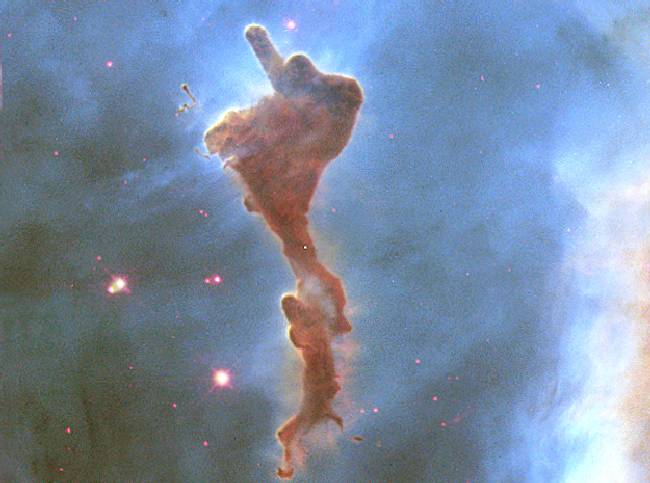 |
| God responds to pontifications of Falwell and Robertson |
The discussion becomes particularly interesting when one reaches into the realm of theology. In every disaster, it is almost inevitable that some Atheists will question how a "merciful God" could allow such things to happen. One can only describe such a remark as being in horrible taste. These folks choose the moment of disaster to attempt to win an argument, the result of which could ultimately destroy what little the disaster victim has left, the very thing that might be keeping him or her going.
On the other side, it is equally inevitable that folks will emerge who credit the grace of God for sparing their house or life even as those of others were destroyed. In many ways, I find this line of reasoning to be equally tactless. This sort of theology has implications that are puzzling at best. If God saves or protects one person from harm, does God not also fail or refuse to protect others in the situation? And if God is in the business of saving people from disaster, then how does God decide who ought to be saved? It seems like Jesus himself says that the sun rises and the rain falls on the righteous along with the wicked (Matthew 5:45).
 Of course, examples of this sort of this theology get even more extreme. During the week of MDS service in Alabama, we had opportunity to listen to one of the clients. His home had sustained significant damage in the tornadoes of 2011, and MDS had just completed the repairs. The gentleman explained that his son had been a preacher, but had died of cancer the night of the storms. The man and his wife returned home from the hospital to find that a tree in their front yard had been uprooted and sent through their roof, but damage was restricted mostly to the garage, although the rest of the house was in disarray. In a typical display of tornado force, the chain from the man's bathtub drain plug had been driven through the tile of his wall without so much as cracking the tile. The man explained that their home had gotten off relatively lightly, compared to the rest of the neighborhood, which was all but leveled. "God protected our house," said he. "But it made the devil so mad that he destroyed the rest of the neighborhood."
Really? Especially if I were the man's neighbor, I would have some major problems with that theological explanation. Is this guy really suggesting that he was saved from disaster because of his own worthiness vis-á-vis his neighbors? Although I suppose his belief is genuine, and its implications not fully thought through, I just have difficulty believing that God had anything to do with the natural disaster at hand in Alabama.
This gentleman's account, however pales in comparison to the assessments that the likes of Pat Robertson and the late Jerry Falwell have made of such events as 9/11, the earthquake in Haiti, the hurricane in New Orleans, the tsunami in Japan, and many others. The details of their pontifications do not bear repeating, but you can follow the links if you cannot remember. These people besmirch the good name of Christianity just as much as those who would use these events to prove absence of a merciful God do atheism. There is no compelling evidence to suggest that God has anything to do with disasters that are the natural byproduct of our tectonic plates and weather systems; even less evidence to suggest God is behind tragedies such as 9/11, Aurora, Columbine, or other such human caused disasters.
Moreover, my understanding of God's involvement in any of these things is functionally quite atheistic. I do not see the hand of God at work in disasters, natural or human. I do not see the devil at work, either, for that matter. What happened in Denver was an individual actor. Many of these happen every day, though on a lesser scale. Nevertheless, they do not represent the devil at work.
On a broader scale, the concept of powers and principalities of evil is a good description of my understanding for those common motives that seem to develop lives of their own to cause harm to real people; for example, excessive profit motives that cause disregard for the environment, for human life, for common decency. In one of his sermons, my friend Alan Stucky provided an excellent description of this understanding of powers and principalities, particularly related to the development of oil fields in Harper County, Kansas, where he lives and pastors the Pleasant Valley Mennonite Church. Because of the money involved with oil, oil company employees, drifters, and profiteers have flocked to the county, occupying all available hotel and rental space. Because they can earn more rent money in this market, land lords increase their tenant's rent, often doubling it overnight and driving it beyond rates their tenants can afford. Those who have land prosper, but the sudden wealth can have negative consequences also, and so on. Listen to his sermon; it is worth the time.
Similarly, the work of God is not so much tied up in the miraculous, but in what we do for our neighbors. The ability to recognize a need and seek to meet that need without recompense. The ability to forgive and hope for better in the face of tragedy. The ability to shirk the powers and principalities to other people's benefit. In many ways, the hand of God is our own.
Monday, July 23, 2012
Obamacare: Why We Should Be Glad it Passed Constitutional Muster, and why the Media Constantly Gets it Wrong
Before reading further, take this quiz here. Do not worry, I am not interested in keeping score, but it is clear and apparent that not many folks know exactly what is in Obamacare. I blame the media, which in its lazy fashion, has taken to the tact of polling people about what they think is in the law, rather than what is actually in the law itself.
This past Thursday marked a milestone in the Supreme Court. Nobody expected that Justice John Roberts would join the liberal four justices in finding The Affordable Care Act to be constitutional. Without going too much into the details of the decision, it is clear that the alternative would have been disaster. The dissenting opinion called for the complete destruction of the measure and effectively limit the powers of the federal government to the point that future attempts at health care reform would be rendered extremely difficult, if not impossible. Because the healthcare situation, with its rising costs and diminishing coverage is untenable, the Supreme Court's decision is certainly cause for celebration.
Admittedly, there are significant flaws to Obamacare. Regardless of subsidies, extensions of medicaid and other provisions, some people will fall through the cracks. Because Obamacare is completely based on private insurance with no public option, this could be a boon for insurance companies, increasing both their profits and their control of the market. While some progress was made on the prescription drug front, the price controls remain minimal. Obamacare can as such be best viewed as a step toward a final solution, rather than a solution in and of itself.
Even so, Obamacare marks the single greatest achievement of the Obama administration so far, and represents the greatest extension of health care benefits in more than a generation. Yet Obamacare remains unpopular, with a slight majority of Americans disapproving of it. Most of Obamacare's provisions, with the exception of the much maligned individual mandate are popular, if one asks about those measures independently. The provisions of this mammoth act are manifold, which might be one reason for its much maligned length. Among other things, Obamacare:
This past Thursday marked a milestone in the Supreme Court. Nobody expected that Justice John Roberts would join the liberal four justices in finding The Affordable Care Act to be constitutional. Without going too much into the details of the decision, it is clear that the alternative would have been disaster. The dissenting opinion called for the complete destruction of the measure and effectively limit the powers of the federal government to the point that future attempts at health care reform would be rendered extremely difficult, if not impossible. Because the healthcare situation, with its rising costs and diminishing coverage is untenable, the Supreme Court's decision is certainly cause for celebration.
Admittedly, there are significant flaws to Obamacare. Regardless of subsidies, extensions of medicaid and other provisions, some people will fall through the cracks. Because Obamacare is completely based on private insurance with no public option, this could be a boon for insurance companies, increasing both their profits and their control of the market. While some progress was made on the prescription drug front, the price controls remain minimal. Obamacare can as such be best viewed as a step toward a final solution, rather than a solution in and of itself.
Even so, Obamacare marks the single greatest achievement of the Obama administration so far, and represents the greatest extension of health care benefits in more than a generation. Yet Obamacare remains unpopular, with a slight majority of Americans disapproving of it. Most of Obamacare's provisions, with the exception of the much maligned individual mandate are popular, if one asks about those measures independently. The provisions of this mammoth act are manifold, which might be one reason for its much maligned length. Among other things, Obamacare:
- Bans discrimination against patients for pre-existing conditions or illness. No longer will a child with diabetes be charged outlandish rates for health insurance, and no longer will someone with cancer in their past be denied coverage because there is a risk of recurrence.
- Guarantees that anyone under 25 may remain on their parents' health insurance. No longer is coverage cut the minute a person leaves college, but extends to allow him or her to establish themselves in a job with such benefits.
- Aims to make health care affordable to just about anyone through exchanges. Those who are not insured through their employers (or those who opt out of their employers' coverage) may receive group coverage anyway at similar rates.
- Mandates that everyone in the country who can afford it purchase health insurance, and issues fines for those who refuse to purchase insurance. Though much maligned, this provision is absolutely necessary, since insurance companies would no longer remain solvent otherwise.
Think about it. The insurance companies are required to ignore pre-existing conditions in offering insurance and figuring rates. This is a boon for those patients who need treatment, of course, but everyone else could simply ride the system, buying insurance only when they become ill and need care. The insurance companies would thus be servicing only the sick, who inherently generate more costs than revenue. A deep pool of healthy patients has always been necessary to keep insurance companies afloat, all the more so since insurance companies will no longer be able to choose their market.
- Provides tax incentives to businesses that offer health insurance, while penalizing those businesses with 50 or more employees who refuse to provide coverage.
- Provides income-based subsidies to help make insurance affordable to as many people as possible.
- Increases the minimum qualification for medicare, offering a safety net to catch many of those who are not otherwise able to get healthcare even after subsidies.
- Puts a "tax" on those people who are financially able, yet refuse to buy insurance because they are healthy now, and can buy in when they are sick anyway. Some people seem to dislike this tax. Ironically, these are the same clowns that go around griping about welfare queens. If you can afford health insurance and refuse to get coverage, you are making the rest of us pay your way. You are the very leach you are complaining about.
Wednesday, July 4, 2012
Happy birthday, USA....kind of.
It is interesting that many folks regard July 4, 1776 as "the birthday
of the United States." When the Declaration of Independence was signed,
little changed for the 13 colonies. They had been fighting the British
for about a year and the war was to last until 1783 when the Treaty of
Paris was signed by the Kingdom of Great Britain and the United States
of America, which ended hostilities and recognized the sovereignty of
the US. Therefore one could say that September 3, 1783 is the “birthday
of the US,” however it was not until the following year that the Treaty
was ratified by the US and Great Britain. The Congress of the
Confederation ratified it in January of 1784 and Great Britain did the
same in April, with the ratified documents being exchanged on May 12,
1784. Then, one may ask, the “birthday of the US” is sometime in 1784? I
would answer no.
It would be another three years, on September 17, 1787, until the Constitution was adopted by the Constitutional Convention and George Washington elected the first President of the United States. In the years between 1781 (when the Articles of Confederation were adopted) and 1787 the United States was a confederation of largely independent states who handled their own foreign and military policies, produced their own currencies, etc. The Articles of Confederation made state’s rights the priority and established a weak central government which turned out to be unsustainable, a lesson that was to be relearned in the Civil War when the Confederate States of America were severely hampered by the priority of state’s rights.[1]
Though the Constitution was adopted in 1787, it was not ratified by all 13 states until May 29, 1790 and in March of the following year the Bill of Rights was ratified. So in all honesty, the United States of America, as we know of it today, did not reach infancy until 1790, a full 14 years after the signing of the Declaration of Independence in 1776. If we are going to celebrate the “birthday of the US” we should really be celebrating it on May 29, not July 4 which celebrates the signing of the Declaration of Independence which was the first explicate statement of the intentions of the rebellion of the colonies.
[1] A good example of this was the different gauges of rail roads in the southern states. Because each state had its own gauge goods had to be moved from one trail to another when being transported across state lines. In times of war this is a huge hindrance when troops and supplies need to be moved quickly and efficiently.
It would be another three years, on September 17, 1787, until the Constitution was adopted by the Constitutional Convention and George Washington elected the first President of the United States. In the years between 1781 (when the Articles of Confederation were adopted) and 1787 the United States was a confederation of largely independent states who handled their own foreign and military policies, produced their own currencies, etc. The Articles of Confederation made state’s rights the priority and established a weak central government which turned out to be unsustainable, a lesson that was to be relearned in the Civil War when the Confederate States of America were severely hampered by the priority of state’s rights.[1]
Though the Constitution was adopted in 1787, it was not ratified by all 13 states until May 29, 1790 and in March of the following year the Bill of Rights was ratified. So in all honesty, the United States of America, as we know of it today, did not reach infancy until 1790, a full 14 years after the signing of the Declaration of Independence in 1776. If we are going to celebrate the “birthday of the US” we should really be celebrating it on May 29, not July 4 which celebrates the signing of the Declaration of Independence which was the first explicate statement of the intentions of the rebellion of the colonies.
[1] A good example of this was the different gauges of rail roads in the southern states. Because each state had its own gauge goods had to be moved from one trail to another when being transported across state lines. In times of war this is a huge hindrance when troops and supplies need to be moved quickly and efficiently.
Friday, June 29, 2012
Mennonite Disaster Service, Birmingham, AL

 A
team of ten volunteers from Virginia joined our team of seven in
Birmingham, and together with the permanent staff of six, we worked to
put four of the properties back into good repair and order. We replaced
a roof, that a falling tree had destroyed. We cleaned up mold and
mildew in the house from one year of exposure to the elements, replacing
contaminated drywall, insulation, and broken windows. At other sites,
teams reframed rooms, built decks, painted walls, and tiled floors.
A
team of ten volunteers from Virginia joined our team of seven in
Birmingham, and together with the permanent staff of six, we worked to
put four of the properties back into good repair and order. We replaced
a roof, that a falling tree had destroyed. We cleaned up mold and
mildew in the house from one year of exposure to the elements, replacing
contaminated drywall, insulation, and broken windows. At other sites,
teams reframed rooms, built decks, painted walls, and tiled floors.Only relatively few in our group had significant construction experience, but working together, we were able to achieve dramatic results by week's end. Many in our group, including me, came home with a new skills. Most importantly, four families were closer to moving back into their homes.
With the number of people and properties still in need of repair work, there are certainly more projects in Birmingham than the MDS unit can handle, but every contribution helps, and MDS is working in a much larger network of aid agencies, providing manual labor for Habitat for Humanity, United Way, and other such organizations' construction projects. Wherever disaster strikes, whether it be tornadoes, hurricanes, earthquakes, or wildfires, MDS units are not far behind to work to put lives and hope back in order.
Just a plug for MDS. The week brought other experiences that I will discuss also.
Tuesday, June 12, 2012
Finding Strangers at the Metrolink
 |
| The Watchtower (A much more interesting one.) |
One sunny morning about a month or so ago, Rosie and I had just dropped off Allison at the MetroLink. Rosie was waiting patiently while I fumbled with my iPod, finding just the right thing to listen to. It might have been Credence, might have been post-Credence Fogerty, or it might have been the Wilders--be sure and catch them if they happen to be in your area! Whatever it was, I did not get much of a chance to listen before two people approached, wanting to ask me about something. I pulled out my earbuds and fully expected to answer yet another person's question about where they might find the local polling station. (I suppose it would be somewhere near the large "vote here" sign?)
As it turned out, the two were not lost at all, but were a couple of Jehovah's witnesses, who were serving out their morning's mission to find lost souls. Apparently, I was one of them. There are several strategies for dealing with Jehovah's witnesses. This being an encounter on the street, the oft used approach of simply closing the door was not available. I do not tend to use that technique anyway, preferring to return the favor instead. If they want a conversation, then they shall have it. I listen to their points, then analyze their implications to exhaustion. Normally, in exchange for the copy of the Jehovah Witnesses' Watchtower, which is usually destined for recycling after a cursory read, I normally like to offer a copy of The Mennonite or Mennonite World Review for perusal, but since this was a street encounter, this was not an option.
If someone asks me if I am saved, for example, I tend to be much more interested in finding out what "being saved" means to the person asking me than I am in actually answering a question about a concept that is somewhat foreign to me to begin with. My view of Christianity is that it is much more of a constantly evolving journey than one specific decision.

It seems that to discuss Jesus too much inevitably leads to some antisemitic remark or other about how "the Jews" lack faith--and are outside of grace--because of their rejection of Christ and obsession with rules. Never mind that God's grace and forgiveness plays a major role in Judaism. Never mind that in the intervening centuries, Christians have given Jews very little reason to be interested in even considering the ways of Christ through their pathetic example. At any rate, I am too far convinced by the works of the late Rabbi Michael Signer, Amy-Jill Levine, Mary Boys and others to have much understanding or patience for the idea that Jews are somehow less faithful or favorable in the eyes of God than Christians. As a side note, it is interesting that the "Jewish obsession with rules" argument often comes not long after condemnations of homosexuality...
 |
| "The Lord Works in Mysterious Ways" |
This sort of analytical thinking does not seem to mesh well with the quick, clear cut sort of answers that Jehovah's Witnesses tend to expect. As usually happens when these conversations get deeper, the Witnesses decided that they had better things to do with their time. I quite agree, as I am sure do the many whose doors they knock on any given Saturday. At any rate, Rosie has more peemail to read, more blogs to comment on.
Monday, June 11, 2012
Thoughts on Genesis 1 and 2
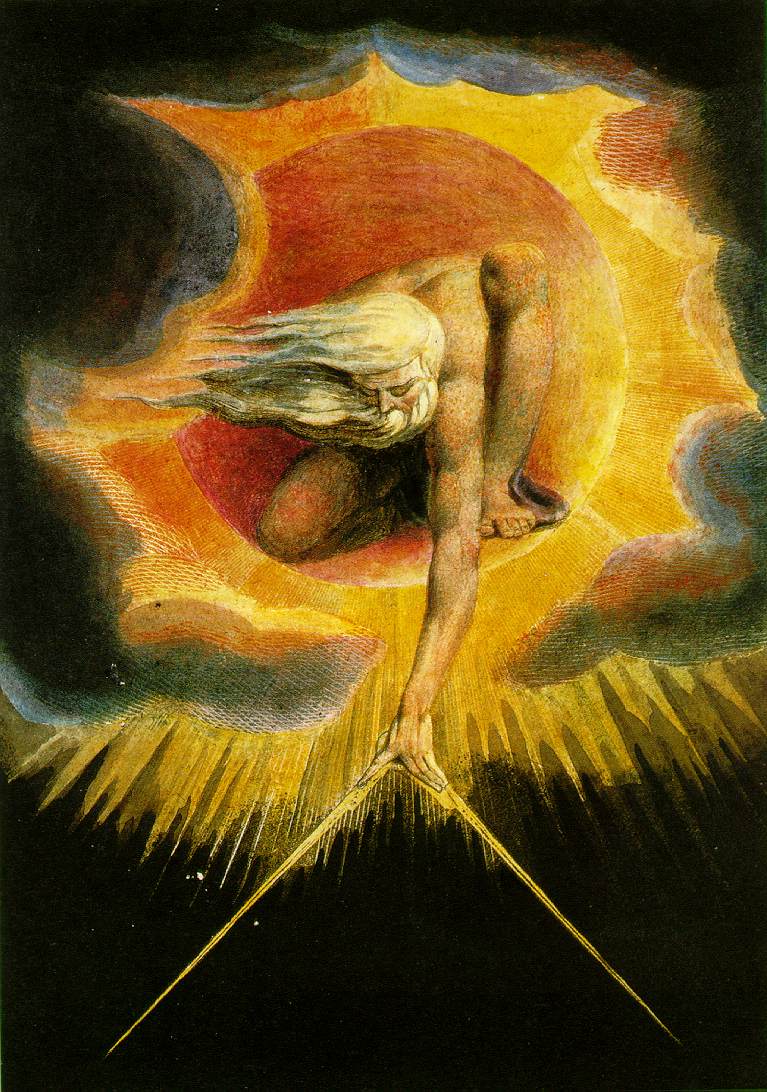
In Genesis 1:2 we are told that the earth was תֹהוּ וָבֹהוּ (tohu wavohu;
traditionally, formless and void). We modern readers often miss the
nuance of this short phrase. Yet, it sets the stage for what follows.
Not only was this primordial earth a chaotic mess, it lacked meaning.
And in the ANE, chaos was evil and order was good. The six days of
creation are not about creation from nothing, about creation in a
scientific sense. They are God establishing the proper order of the
natural world, of which humanity is a part, out of the primeval chaos.
Genesis 1 utilizes an amazing parallel structure to illustrate the intentionality of the creative act:2
Day 1, Separation of light and Darkness (1:3-5)
\\Day 4, Separation of the luminaries in the sky (1:14-19)
Day 2, Separation of the two waters (creation of the sky) (1:6-8)
\\Day 5, Creation of the sea creatures and birds (1:20-23)
Day 3, Seas and dry land/vegetation (1:9-13)
\\Day 6, land creatures (including humans) and vegetation (1:24-31)
Each
day is punctuated by the formulaic divine observation that this
ordering is "good." After six "days" of creation, God observes that the
formerly chaotic and meaningless earth is now "very good" in its order.
While this structure establishes the created order as exactly that, order, it reveals little about "why" it was created.3
Yet, throughout Genesis 1 are keys to answering "Why?" The first thing
to understand is that Genesis 1 is highly stylized. There is a clear
pattern and, generally speaking, this pattern is not interrupted. That
is, it isn't at least until Day 5. In 1:22, God breaks the pattern of
the previous four days with the curious blessing to the fish and the
birds: "And God blessed them saying, 'Be fruitful and
multiply and fill the waters of the sea and let the birds multiply in the
land.'" (my translation). This is a curious interruption of the pattern and I am not sure what to make of it.
Things
get really strange in Day 6 when the whole pattern is completely
interrupted. Instead of God speaking and "it was so," in 1:26 God
suddenly engages in an internal dialogue, which is curiously in the
plural (let us, in our image). Much ink has been, and will continue to
be, spilled attempting to make sense of the plurality of 1:26. While
investigation of this curious plurality is important, focusing on it
causes us to miss the point. The key verb of this verse is "to rule."
In
the modern world, this verb (in conjunction with "subdue" in 1:28) has
been interpreted to mean we can do as we wish with the earth. Yet, this
is not the case at all. The verb in question is רדה (radah).
Interestingly, this verb is only used by P4 in the Pentateuch and of its 7 occurrences two are in Genesis, one is in Numbers and four are in Leviticus. This verb clearly indicates a hierarchical relationship, yet the Pentateuch seems to apply an additional layer of meaning which is most obvious in the problematic text of Leviticus 25. Three times Leviticus 25 says "but you shall not rule over him [an Israelite sold into debt slavery] in harshness." I do not want to downplay the highly problematic (that is an admitted understatement) nature of debt slavery, even in the idealized way it is presented in the Pentateuch, but the use in Leviticus 25 adds a layer of nuance which we cannot capture in English. Within this hierarchical relationship the one doing the ruling has a clear responsibility to the one being ruled. The one being ruled is not a commodity for the ruler to exploit with no concern for the "rulee." To the contrary, the ruler is to care of the "rulee." Yes, humanity is to rule over creation, but that does not give us the right to abuse and exploit creation. In doing so, we violate Torah. As Victor Hamilton points out "even in the garden of Eden he who would be the lord of all must be servant of all."5
Interestingly, this verb is only used by P4 in the Pentateuch and of its 7 occurrences two are in Genesis, one is in Numbers and four are in Leviticus. This verb clearly indicates a hierarchical relationship, yet the Pentateuch seems to apply an additional layer of meaning which is most obvious in the problematic text of Leviticus 25. Three times Leviticus 25 says "but you shall not rule over him [an Israelite sold into debt slavery] in harshness." I do not want to downplay the highly problematic (that is an admitted understatement) nature of debt slavery, even in the idealized way it is presented in the Pentateuch, but the use in Leviticus 25 adds a layer of nuance which we cannot capture in English. Within this hierarchical relationship the one doing the ruling has a clear responsibility to the one being ruled. The one being ruled is not a commodity for the ruler to exploit with no concern for the "rulee." To the contrary, the ruler is to care of the "rulee." Yes, humanity is to rule over creation, but that does not give us the right to abuse and exploit creation. In doing so, we violate Torah. As Victor Hamilton points out "even in the garden of Eden he who would be the lord of all must be servant of all."5
Further,
the langauge of 1:26 and 1:28 is language that is usually reserved for
the king in other ANE literature. However, Genesis 1 takes royal
language and applies it to all of humanity, male and female (there is no
gender hierarchy established in Genesis 1, or 2 for that matter).
Another
important way that Genesis 1 constructs meaning is made obvious when it
is put in conversation with other ANE creation accounts. In the
Babylonian Enuma Elish,
the universe is created via a cosmic battle between Marduk and Tiamat.
Humanity is created to serve the needs of the lazy gods. This is in
contrast to the nonviolent ordering of creation in Genesis where
humanity is created to care for the created order as a part of that
created order.
This contrast is even more obvious in Egyptian creation literature.6 Egyptians creation myths (esp. the Coffin and Pyramid Texts) have far too many similarities with Genesis for it to be coincidental. In the Egyptian literature there is primeval chaos, the breath/wind of a deity moves over the waters, the waters are separated to form dry ground and the overall storylines are parallels (pre-creation chaos → breath/wind moves on the water → creation of the sky → formation of the heavenly ocean by the separation of the waters → formation of dry ground).
But the similarities make the contrasts even more obvious: Creator deity (Atum) is created (either by the receding deep or by the creation of light), creation of humanity is accidental (the tears of joy or sorrow of the creator deity), only Pharaoh is created in the image of the divine
This contrast is even more obvious in Egyptian creation literature.6 Egyptians creation myths (esp. the Coffin and Pyramid Texts) have far too many similarities with Genesis for it to be coincidental. In the Egyptian literature there is primeval chaos, the breath/wind of a deity moves over the waters, the waters are separated to form dry ground and the overall storylines are parallels (pre-creation chaos → breath/wind moves on the water → creation of the sky → formation of the heavenly ocean by the separation of the waters → formation of dry ground).
But the similarities make the contrasts even more obvious: Creator deity (Atum) is created (either by the receding deep or by the creation of light), creation of humanity is accidental (the tears of joy or sorrow of the creator deity), only Pharaoh is created in the image of the divine
Genesis 1 and 2 read very differently when placed in literary and theological contrast to the literature of its historical and geographical context than when we try to pit Genesis against science (or try to make science fit Genesis). When making Genesis scientific, we miss the theological and literary points of the text. In ancient creation myths, the point is not to provide a scientific explanation of how the world came to be. Instead, the point is to describe why the world is like it is, or how the world should be. This does not mean that science is unimportant or has nothing of value to offer. Mythic narratives provide answers to questions that science is not asking (the philosophical or theological questions), just as science is providing answers to questions that philosophy isn't asking. It is time to engage Genesis on its own terms (at least as much as is possible) rather than forcing science into the framework of Genesis.
1. Samuel E. Balentine, The Torah’s Vision of Worship (Minneapolis, MN: Fortress Press, 1999), 83.
2. See Ben C. Ollenburger, “Creation and Peace: God and Creature in Genesis 1 – 11.” Pages 143-158 in The Old Testament in the Life of God’s People: Essays in Honor of Elmer A. Martens (ed. Jon Isaak; Winona Lake: Eisenbrauns, 2009).
3. Without delving into the complexities of the issue, in this context "created" clearly does not mean ex nihilo. Rather, the "creating" is more of a separation. Recently Ellen Van Wolde, Robert , Bob Becking and Marjo Korpel engaged in a lively debate about the exact meaning of the verb ברא (bara, to create). See Ellen Van Wolde "Why the Verb ברא Does not Mean 'to Create' in Genesis 1.1-2.4a," JSOT 34 (2009): 3-23; Bob Becking and Marjo Korpel, "To Create, to Separate, or to Construct: An Alternative for a Recent Proposal as to the Interpretation of ברא in Gen 1:1-2:4a," JHS 10, artcile 3 (2010): http://www.arts.ualberta.ca/JHS/Articles/article_131.pdf; and Ellen Van Wolde Ellen Van Volde and Robert Rezetko, “Semantics and the Semantics of ברא: A Rejoinder of the Arguments Advanced by B. Becking and M. Korpel” JHS 11, article 9 (2011): http://www.arts.ualberta.ca/JHS/Articles/article_156.pdf.
4. Though I am assuming the Documentary Hypothesis, I am not doing so without acknowledging the problematic nature of this theory. Eventually, even the foundational and leading DH theorists had to admit that their analysis did not necessarily run through the whole Pentateuch. For example, Martin Noth conceded that "if one took [Numbers] by itself, one would not easily arrive at the idea of 'thoroughgoing sources,' but would more likely arrive at the idea of an unsystematic combination of numerous transmission pieces" (Martin Noth, Das vierte Buch Mose: Numeri [ATD 7; Gottigen: Vandenhoeck and Puprech 1977], 8; quoted in Konrad Schmid, Genesis and the Moses Story: Israel's Dual Origins in the Hebrew Bible[SipLTHS 3; Winona Lake, IN: Eisenbrauns, 2010], 91). Konrad Schmid notes that a big problem with the DH is that "pentateuchal research has been determined by theories that were first explored and defended in Genesis and then assumed to be equally applicable in Exodus-Numbers" (Schmid, 91). At the very least, we can still (generally) apply this theory to Genesis.
2. See Ben C. Ollenburger, “Creation and Peace: God and Creature in Genesis 1 – 11.” Pages 143-158 in The Old Testament in the Life of God’s People: Essays in Honor of Elmer A. Martens (ed. Jon Isaak; Winona Lake: Eisenbrauns, 2009).
3. Without delving into the complexities of the issue, in this context "created" clearly does not mean ex nihilo. Rather, the "creating" is more of a separation. Recently Ellen Van Wolde, Robert , Bob Becking and Marjo Korpel engaged in a lively debate about the exact meaning of the verb ברא (bara, to create). See Ellen Van Wolde "Why the Verb ברא Does not Mean 'to Create' in Genesis 1.1-2.4a," JSOT 34 (2009): 3-23; Bob Becking and Marjo Korpel, "To Create, to Separate, or to Construct: An Alternative for a Recent Proposal as to the Interpretation of ברא in Gen 1:1-2:4a," JHS 10, artcile 3 (2010): http://www.arts.ualberta.ca/JHS/Articles/article_131.pdf; and Ellen Van Wolde Ellen Van Volde and Robert Rezetko, “Semantics and the Semantics of ברא: A Rejoinder of the Arguments Advanced by B. Becking and M. Korpel” JHS 11, article 9 (2011): http://www.arts.ualberta.ca/JHS/Articles/article_156.pdf.
4. Though I am assuming the Documentary Hypothesis, I am not doing so without acknowledging the problematic nature of this theory. Eventually, even the foundational and leading DH theorists had to admit that their analysis did not necessarily run through the whole Pentateuch. For example, Martin Noth conceded that "if one took [Numbers] by itself, one would not easily arrive at the idea of 'thoroughgoing sources,' but would more likely arrive at the idea of an unsystematic combination of numerous transmission pieces" (Martin Noth, Das vierte Buch Mose: Numeri [ATD 7; Gottigen: Vandenhoeck and Puprech 1977], 8; quoted in Konrad Schmid, Genesis and the Moses Story: Israel's Dual Origins in the Hebrew Bible[SipLTHS 3; Winona Lake, IN: Eisenbrauns, 2010], 91). Konrad Schmid notes that a big problem with the DH is that "pentateuchal research has been determined by theories that were first explored and defended in Genesis and then assumed to be equally applicable in Exodus-Numbers" (Schmid, 91). At the very least, we can still (generally) apply this theory to Genesis.
5. Victor Hamilton, The Book of Genesis: Chapters 1-17 (NICOT; Grand Rapids, MI: William B. Eerdmans Publishing Co., 1990), 138.
6. See Gordon H. Johnston, "Genesis 1 and Ancient Egyptian Creation Myths," Bibliotecha Sacra 165 (2008): 178-194.
Subscribe to:
Posts (Atom)